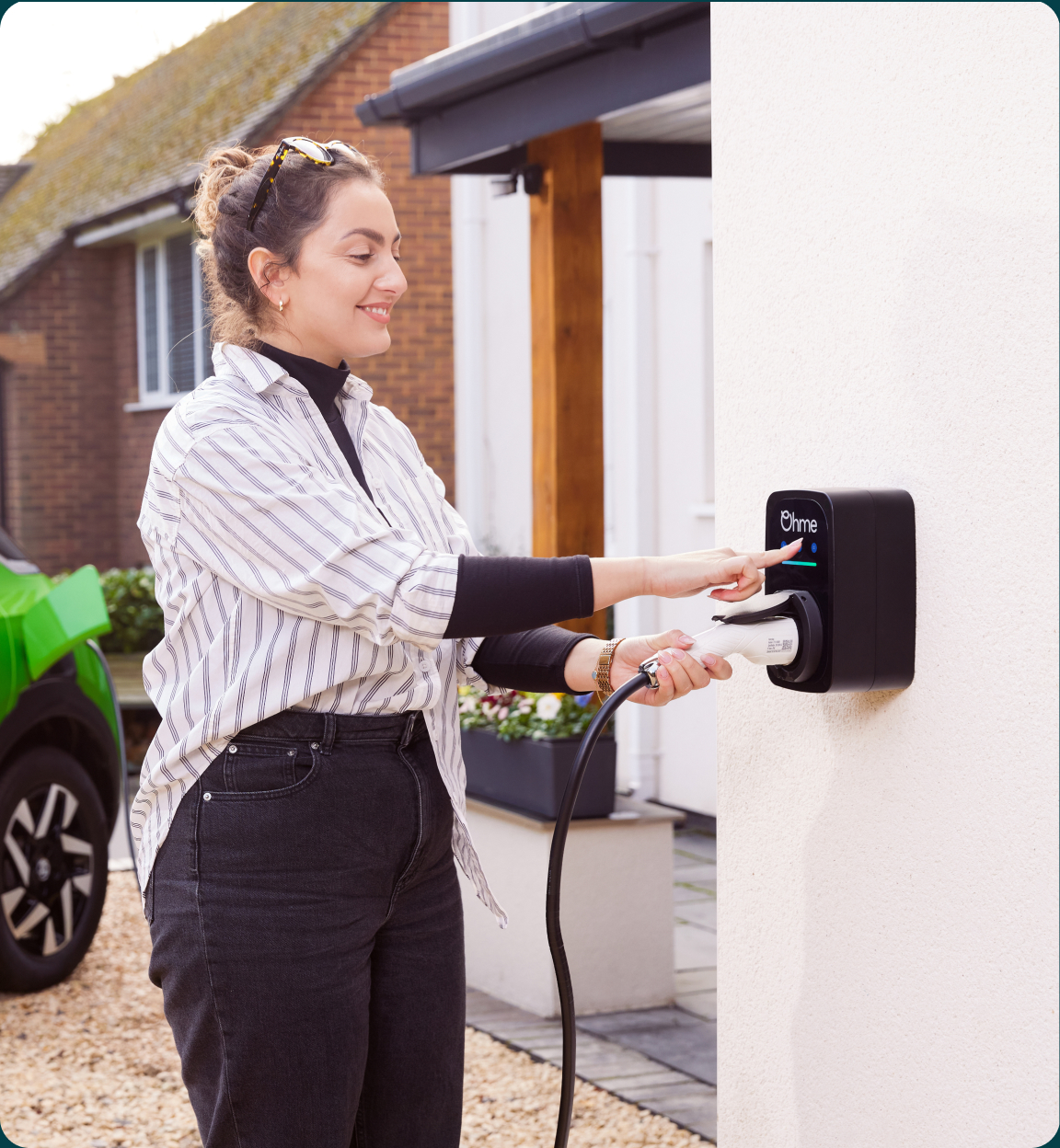
There are great positive impacts that could be made every day by changing the way we use electricity. Luckily, if you have an Ohme EV charger at home, optimising your charging while contributing to a balanced and greener network is easy.
How does Ohme technology link my charger to the electricity network?
All Ohme chargers can stop and start charging automatically to help balance electricity demand across the network. They also feature built-in load balancing to automatically adjust their output alongside other home appliances.
Demand on the network is inevitably growing as EV ownership grows. Ohme’s smart technology allows us to adjust the power into your car, meeting your charging goals, while also helping to meet electricity demand and provide energy flexibility.
What is energy flexibility?
Energy flexibility refers to the ability to adjust supply and demand, so they always balance. On any typical day, there are highs and lows of electricity use across the Republic of Ireland. There can be morning peaks in demand (usually when people are getting ready to go to work, make a cup of tea, or have a shower) and other peaks can be in the evening (when people arrive home from work, cook dinner, or turn on home appliances).
In the same way, not many people use a lot of electricity in the middle of the night – or indeed the middle of the day. These are, you’ve guessed it, the periods of low demand on the electricity network.
How can my Ohme charger contribute to energy flexibility?
So we’ve learned that energy flexibility is about trying to shift some of the high demand into those periods of low demand. The challenge is how can we do that. It’s not realistic to cook your dinner at 3am, but with Ohme’s smart charging technology, we can shift charging your car into those low demand periods, which then helps the overall balance of supply and demand.
Why does that matter? With more flexibility on the network, it means that there won’t be so much need to invest in generating and supplying more energy. Instead, we can just distribute the existing capacity in a smart way which will help everyone save a bit of money.
What are the environmental savings of energy flexibility?
Ohme communicates with the electricity network which allows you to charge when carbon intensity is at its lowest.
When the sun is shining or the wind is blowing and lots of renewable energy is being generated, Ohme can start charging to fill up your car with that excess energy that can’t otherwise be stored on the network. When lots of households and businesses are using electricity at the same time, Ohme can delay charging to avoid reliance on fossil fuels.
Everyone benefits from that too. Increasing the use of renewable energy, not only makes for a cleaner electricity network, but could also reduce costs for the energy suppliers. Creating a knock-on effect on your future bills too.
How can I benefit from energy flexibility?
As we just mentioned, long term, the increased use of flexibility when charging your EV will help reduce the need to build additional network capacity, which means lower energy bills for everyone, and a cleaner electricity network.
Last winter in the UK for example, 1.6 million households participated in the National Grid System Operator’s new Demand Flexibility Service which encouraged consumers to use less electricity when lots of households and businesses were using electricity at the same time. The service saw 3,300MWH of electricity saved – enough energy to power approximately 10 million homes. Over the course of the entire flexibility trials in the UK, we helped 20,000 Ohme EV charger owners to flex almost 150MW of electricity earning them more than £750,000 of rewards over 13 months.
As Ohme enters several other exciting flexibility projects similar to that in the UK, drivers taking part can receive rewards of varying levels by doing something as simple as plugging in their cars and helping us learn the best ways to help balance the electricity network.